
Wann: Donnerstag, 07.05.2026, 11-12 Uhr
Wo: Zoom Webinar
Sprache: Englisch



Achieving climate neutrality requires deep decarbonization across all sectors of the economy. While direct electrification will play a central role, it reaches its limits in so-called hard-to-abate sectors such as heavy industry, aviation, and shipping. In these areas, hydrogen and hydrogen-based fuels are widely seen as key building blocks of a net-zero energy system. At the same time, their role remains contested due to high costs, limited availability, and significant system-wide trade-offs.
Recent research highlights both the promise and the constraints of hydrogen: while it can enable substantial emissions reductions in selected applications, scaling up production requires vast amounts of renewable energy, infrastructure, and investment, and may only deliver part of the needed mitigation potential.
This webinar brings together perspectives from research, industry, and policy to discuss a central question: what role should hydrogen realistically play in the energy transition? Experts will explore evidence from recent studies, insights from emerging projects, and implications for energy system design, focusing on where hydrogen adds value and where alternative solutions may be more efficient.
This GEE Energy@Lunch event is being organized in collaboration with the SAEE (Swiss Association for Energy Economics).
The webinar will be conducted in English.
Zur Registrierung:https://fernuni-hagen.zoom-x.de/webinar/register/WN_CxtwKBkzRUmPSY-wyaqSdQ
Die Vortragenden
Prof. Dr. Russell McKenna is Professor of Energy Systems Analysis in the Department of Mechanical and Process Engineering (D-MAVT) at ETH Zurich and Head of the Laboratory of Energy Systems Analysis at the Paul Scherrer Institute (PSI). His research focusses on the holistic interdisciplinary assessment of energy technologies and systems and in the development and application of energy system models, as well as in developing methods for resource assessments for low carbon technologies using open data. He is the president of the Swiss Association of Energy Economics (SAEE).
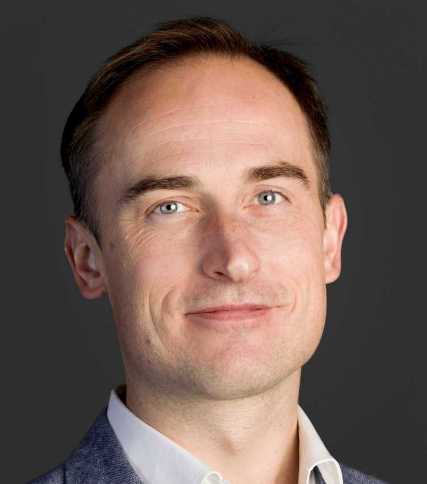
Prof. Dr. Falko Ueckerdt is a Full Professor of Energy Transition and Climate Futures at the Interdisciplinary Transformation University (IT:U) in Linz, Austria, and a Guest Researcher at the Potsdam Institute for Climate Impact Research (PIK), Germany. His group conducts research and provides science-based policy advice on transforming energy systems toward climate neutrality. It investigates technological and policy pathways for developing flexible, digital, and renewable-based energy systems. A central focus of our work is the role of direct electrification, hydrogen, and e-fuels across key sectors such as transport, buildings, and industry.
Dr. Eva Schmid is Director Hydrogen and Synthetic Energy Carriers at the German Energy Agency (dena). In the department Future of Energy Supply her team supports the development of value chains, markets and the system integration of hydrogen and powerfuels both in the national and international context. She has an academic background in climate mitigation scenarios, participative energy system modelling, dealing with conflicting policy goals in energy transitions as well as regulation of line-bound energy infrastructures. The question that has always been central in her work is: How to put the energy transformation into practice?
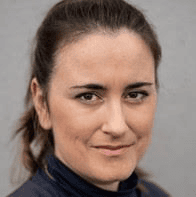

Dr. Boris Krey is a member of the Executive Board of the Association of the Swiss Gas Industry (VSG), where he is Head of the Energy Economics and Policy Division. He holds a PhD in Energy Economics from the University of Zurich. The 43-year-old, who holds dual German-Swiss citizenship, has headed the Energy Economics division for the Canton of Aargau since 2017. Prior to that, he worked as a regulatory specialist at the Swiss Federal Office of Energy from 2011 to 2017, where his responsibilities included gas network access. He is also a Board Member of the Swiss Association for Energy Economics (SAEE).
Daniel Bischofberger is CEO of Accelleron, a global leader in turbocharging, fuel injection, and digital solutions for marine and energy industries. Since leading Accelleron’s spin-off from ABB in 2022, he has established the company as an independent, publicly listed business and has driven sustained growth by scaling decarbonization technologies for shipping and power generation. He previously held senior leadership roles at Sulzer, ABB, and Alstom and holds degrees in mechanical and industrial engineering from ETH Zurich. He is a board member of Bystronic.
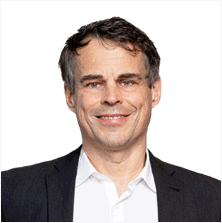
Die Moderatoren
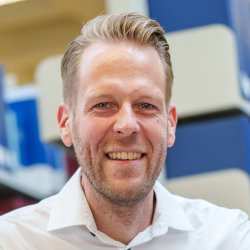
Prof. Dr. Michael Bucksteeg is an assistant professor of business administration, specializing in energy economics, at the FernUniversität in Hagen. He is also vice chairman of the Society for Energy Science and Energy Policy (GEE).
Zur Registrierung
Zur Registrierung:https://fernuni-hagen.zoom-x.de/webinar/register/WN_CxtwKBkzRUmPSY-wyaqSdQ